


Introduction
A startup in the U.S. launches a product and suddenly sees support tickets jump from 20 a day to 500. Hiring locally would take months and cost a fortune. Instead, they partner with an offshore team and scale overnight. Within weeks, response times drop and customer satisfaction improves.
This isn’t an edge case anymore. It’s how modern businesses operate.
Outsourcing call center services has shifted from a cost-cutting tactic to a strategic growth move. With global talent access, 24/7 support expectations, and rising competition, companies are increasingly turning to international call center outsourcing to stay responsive and efficient.
What is Call Center Outsourcing?
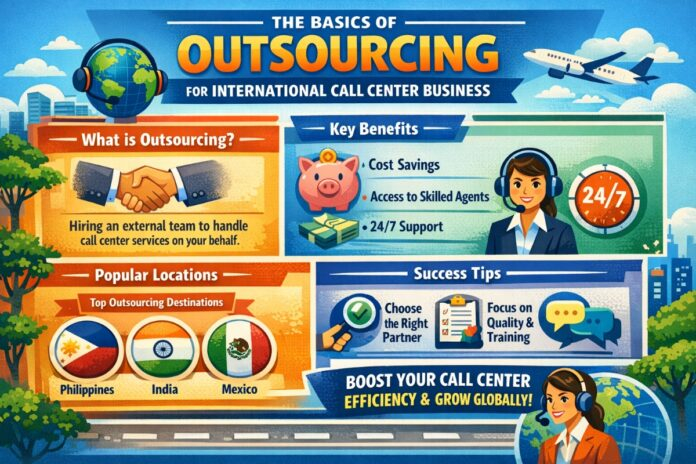
Call center outsourcing means hiring a third-party provider to handle customer interactions on your behalf. These providers can be local or international, but most businesses prefer offshore call centers for scalability and cost advantages.
Types of Call Center Services
- Inbound Call Centers: Handle incoming queries like customer support and technical assistance.
- Outbound Call Centers: Focus on sales, lead generation, and follow-ups.
- Blended Call Centers: Combine inbound and outbound services.
Why Businesses Choose International Outsourcing
- Cost Efficiency: Reduce operational costs significantly.
- 24/7 Support: Serve customers across time zones.
- Access to Skilled Workforce: Trained agents with global experience.
- Scalability: Quickly expand or reduce team size.
Popular Outsourcing Destinations
India
- Strong English proficiency
- Cost-effective scaling
- Experienced workforce
Philippines
- Neutral accent
- Strong customer service culture
- Ideal for voice support
Eastern Europe
- Technical expertise
- High-quality support
Latin America
- Time zone alignment
- Bilingual support
Key Benefits of Outsourcing Call Centers
- Cost Savings: Lower overhead and operational expenses.
- Better Customer Experience: Faster response and resolution.
- Focus on Core Business: Free internal resources.
- Access to Technology: CRM, analytics, and AI tools.
Challenges and Risks
- Communication Barriers: Cultural and contextual differences.
- Quality Control: Inconsistent service without monitoring.
- Data Security: Compliance risks across borders.
- Cultural Differences: Varying customer expectations.
How to Choose the Right Call Center Partner
- Industry experience
- Compliance and security standards
- Technology compatibility
- Training processes
- Quality assurance systems
- Transparent pricing
- Client reviews
Best Practices for Successful Outsourcing
- Define KPIs: Response time, CSAT, resolution rate
- Regular Monitoring: Reviews and audits
- Training: Product knowledge and SOPs
- Communication: Clear reporting and escalation paths
Future Trends in Call Center Outsourcing
- AI Integration: Chatbots and automation
- Omnichannel Support: Unified communication channels
- Remote Workforce: Distributed global teams
Conclusion
Outsourcing call center services is now a strategic growth tool. It helps businesses scale faster, improve customer support, and access global talent.
Success depends on choosing the right partner, setting clear expectations, and maintaining consistent oversight. If you’re considering outsourcing, start by identifying your needs and evaluating partners carefully.