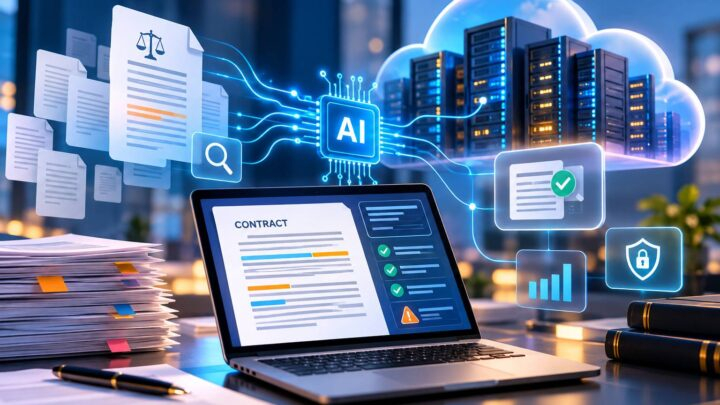


Hiring has become a volume game. A single job posting can attract hundreds or thousands of applications within days, and recruiters cannot read them all. AI recruitment platforms now screen resumes, match candidates to roles, schedule interviews, run chat-based assessments and answer candidate questions around the clock. For US employers, that can mean faster hiring and a better candidate experience.
It also brings real responsibility. AI hiring tools process personal data, influence decisions about people’s livelihoods and face growing legal scrutiny for bias. Choosing cloud servers for AI recruitment platforms is not only about handling application spikes. It is about storing candidate data securely, logging decisions for audits and supporting fairness testing. At CRECSO, we help HR tech companies and employers build recruitment platforms that scale and stay compliant.
In this guide, you will learn what AI hiring workloads need, the architecture that supports them, what Unilever learned from AI-assisted hiring, the common mistakes and a practical plan for choosing cloud servers for AI recruitment platforms.
What AI Recruitment Platforms Do
- Parse resumes and extract skills, experience and education.
- Match candidates to job requirements and rank shortlists.
- Run chatbots that answer questions and schedule interviews.
- Host recorded video interviews and online assessments.
- Generate job descriptions and outreach messages.
Architecture for Cloud Servers for AI Recruitment Platforms
1. Application Intake That Scales
Job launches, campus hiring seasons and seasonal retail hiring create sudden spikes. Queues and autoscaling workers keep resume parsing steady, even when thousands of applications arrive in an hour.
2. Candidate Data Storage
Personal data is encrypted and stored with clear retention rules. Candidates in some states, such as California, have rights to access or delete their data.
3. Matching and Ranking Models
Embeddings and ranking models compare skills with job requirements. Results should come with explanations recruiters can understand.
4. Video and Assessment Hosting
Video interviews need storage, streaming and sometimes transcription. These workloads can be bandwidth-heavy.
5. Fairness Testing and Audit Logs
Every score, model version and decision is logged so bias audits can be run. Microsoft’s responsible AI principles highlight fairness and accountability, both of which need technical support in the platform.
| Workload | Typical Compute | Key Risk |
|---|---|---|
| Resume parsing | CPU workers or hosted AI | Formatting errors |
| Candidate matching | Embeddings plus ranking models | Biased rankings |
| Chat assistants | Hosted language models | Inaccurate answers |
| Video interviews | Storage, streaming, transcription | Privacy and consent |
Platforms that host interviews often benefit from our cloud video conferencing services.
Real Business Example: Unilever’s AI-Assisted Hiring
Business challenge: Unilever receives a very large number of applications for its graduate programs worldwide, including in the US. Manual screening was slow and costly.
Solution: The company introduced online game-based assessments and recorded video interviews analyzed with AI, using vendors including HireVue.
Implementation: Candidates completed assessments and video interviews on their own schedules. Recruiters reviewed shortlisted candidates before final in-person stages.
Outcome: Unilever reported saving around 100,000 hours of interviewing time and roughly $1 million a year, with faster time to hire.
Business impact: The results drew attention, and so did the criticism. HireVue later stopped using facial analysis in its assessments in 2021 after public concerns, a reminder that fairness and transparency matter as much as efficiency.
Planning Capacity and Costs
Hiring traffic is seasonal. Retailers hire heavily before the holidays, and universities feed graduate programs each spring. Size cloud servers for AI recruitment platforms for those peaks with autoscaling, but keep the baseline small. Video storage is often the biggest ongoing cost, so set lifecycle rules that move old interview recordings to cheaper storage and delete them when retention periods end. Track cost per applicant processed, which helps HR tech companies price their product and helps employers compare vendors fairly.
Pros and Cons of Cloud AI Recruitment
| Pros | Cons |
|---|---|
| Faster screening at high volume | Risk of biased outcomes |
| 24/7 candidate communication | Growing state and city regulations |
| Better consistency across recruiters | Candidate trust can suffer if AI feels opaque |
Best Practices
- Run regular bias audits on screening and ranking models.
- Tell candidates when AI is used and how.
- Keep humans responsible for hiring decisions.
- Store candidate data with clear retention and deletion rules.
- Log model versions and scores for every decision.
HR leaders looking for practical uses can learn more on AI for HR.
Common Mistakes to Avoid
- Training models on past hiring data without checking for historical bias.
- Letting AI auto-reject candidates with no human review.
- Ignoring local laws such as New York City’s Local Law 144 on automated hiring tools.
- Keeping candidate data indefinitely.
How to Get Started
- Choose one stage, such as resume screening or interview scheduling.
- Review legal requirements for every state and city you hire in.
- Set up cloud servers for AI recruitment platforms with encryption, logging and autoscaling.
- Run a bias audit before launch and after each model change.
- Measure time to hire, candidate satisfaction and quality of hire.
AI recruitment readiness checklist:
- Candidate disclosure and consent in place
- Bias audit completed and documented
- Human review for rejections
- Data retention rules configured
- Peak hiring capacity tested
HR tech startups building new products can move faster with our SaaS development services.
Future Trends
Expect AI agents that source candidates and coordinate interviews, more skills-based hiring and stricter rules on automated decisions, including Colorado’s AI Act. Cloud servers for AI recruitment platforms will need built-in fairness testing and clearer candidate explanations.
Key Takeaways
- AI recruitment needs scalable intake, secure data and audit logs.
- Fairness testing and transparency are legal and ethical must-haves.
- Humans should own final hiring decisions.
Conclusion
The right cloud servers for AI recruitment platforms help employers hire faster while protecting candidates and staying on the right side of the law. Scalable intake, secure storage, explainable matching and regular bias audits are the foundations. CRECSO helps US HR tech companies and employers build fair, reliable hiring platforms. Ready to modernize hiring? Talk to our cloud team.