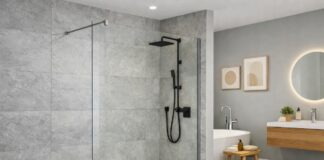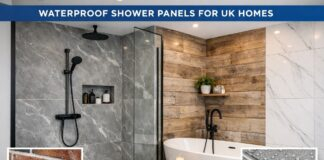


The global PVC wall panels market is projected to exceed USD 21 billion by 2035, growing at a compound annual growth rate of roughly 14%. That is not a niche hobby—it is a full-scale materials revolution sweeping through bathrooms worldwide.
For decades, ceramic tiles were the default choice for wet-area walls. But modern homeowners, interior designers, and renovation planners are reconsidering that default. PVC bathroom wall panels now offer faster installation, significantly lower costs, zero grout maintenance, and design options that rival natural stone and marble—all while being 100% waterproof.
In this article, you will learn exactly what is driving the shift, explore the eight biggest PVC panel trends shaping bathrooms in 2026, compare PVC against traditional tiles on every metric that matters, and pick up practical installation and maintenance tips. Whether you are a homeowner planning a weekend refresh or an architect specifying materials for a boutique hotel, this guide delivers the insights you need to make a confident decision.
1. What Are PVC Bathroom Wall Panels?
PVC bathroom wall panels are prefabricated sheets made from polyvinyl chloride, a lightweight yet rigid thermoplastic polymer. They are specifically engineered for wet environments—showers, bath surrounds, wet rooms, and washroom walls—where moisture resistance is non-negotiable.
Each panel typically ranges from 2.4 to 2.8 metres in height and 250 mm to 1,200 mm in width, allowing a single panel to cover a large wall section with minimal joints. Panels feature a tongue-and-groove interlocking system, meaning they click together seamlessly and can be fixed over existing tiles, plaster, or plywood using adhesive or screws.
Key takeaway: PVC panels are not a budget compromise—they are a purpose-built waterproof wall system that eliminates grout, reduces labour, and opens up design possibilities that would cost three to five times more with natural materials.
2. Why PVC Panels Are Trending in Modern Bathrooms
Several converging forces explain the surge in PVC panel adoption:
- Cost efficiency: Industry data suggests PVC panel installation costs 40–60% less than a comparable tiled bathroom, once you factor in adhesive, grout, and labour.
- Speed: A standard bathroom can be fully panelled in 3–4 hours versus 2–3 days for tile work. In rental properties and hospitality projects, that time saving translates directly to revenue.
- Zero grout, zero mould: Grout lines remain the biggest maintenance headache in tiled bathrooms. PVC panels eliminate them entirely, offering a non-porous surface where mould and bacteria cannot gain a foothold.
- Design evolution: High-definition digital printing (above 720 dpi) now allows panels to replicate marble, stone, wood, and abstract patterns with photographic realism. Customisable panel designs grew by 31% in recent product launches globally.
- Sustainability shift: Recycled-content PVC panels represented over 34% of global new product launches in 2024, reflecting growing demand for lower-impact renovation materials.
- Antimicrobial innovation: New antimicrobial PVC coatings achieve 92–98% bacteria reduction, making panels especially attractive for hospital, care-home, and food-service environments.
Here’s what most people miss: PVC panels can be installed directly over existing tiles without demolition. This alone can save hundreds of dollars and several days of disruption—a critical advantage for rental-friendly upgrades and occupied commercial spaces.
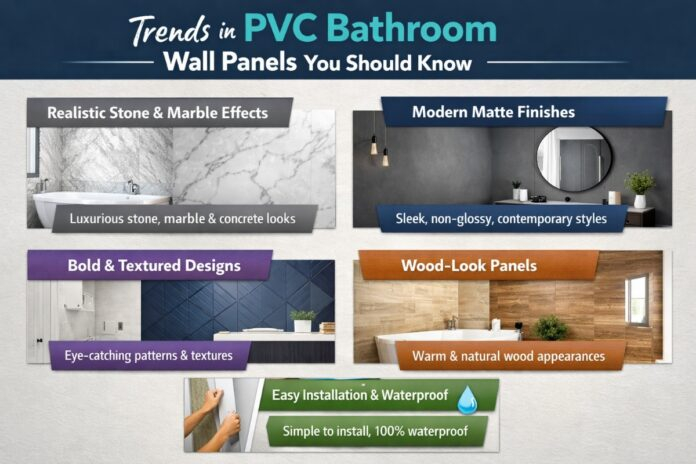
3. Top PVC Bathroom Wall Panel Trends for 2026
This is the core of the conversation. Below are the eight trends that are defining the look, feel, and functionality of PVC bathroom panels right now.
3.1 Minimalist Matte Finishes
High-gloss panels dominated for years, but the market has shifted decisively toward matte and satin finishes. These deliver a softer, more contemporary aesthetic that hides fingerprints, water spots, and minor surface imperfections. Matte panels suit Scandinavian-inspired and Japanese minimalist bathroom designs especially well, where visual quietness is the goal.
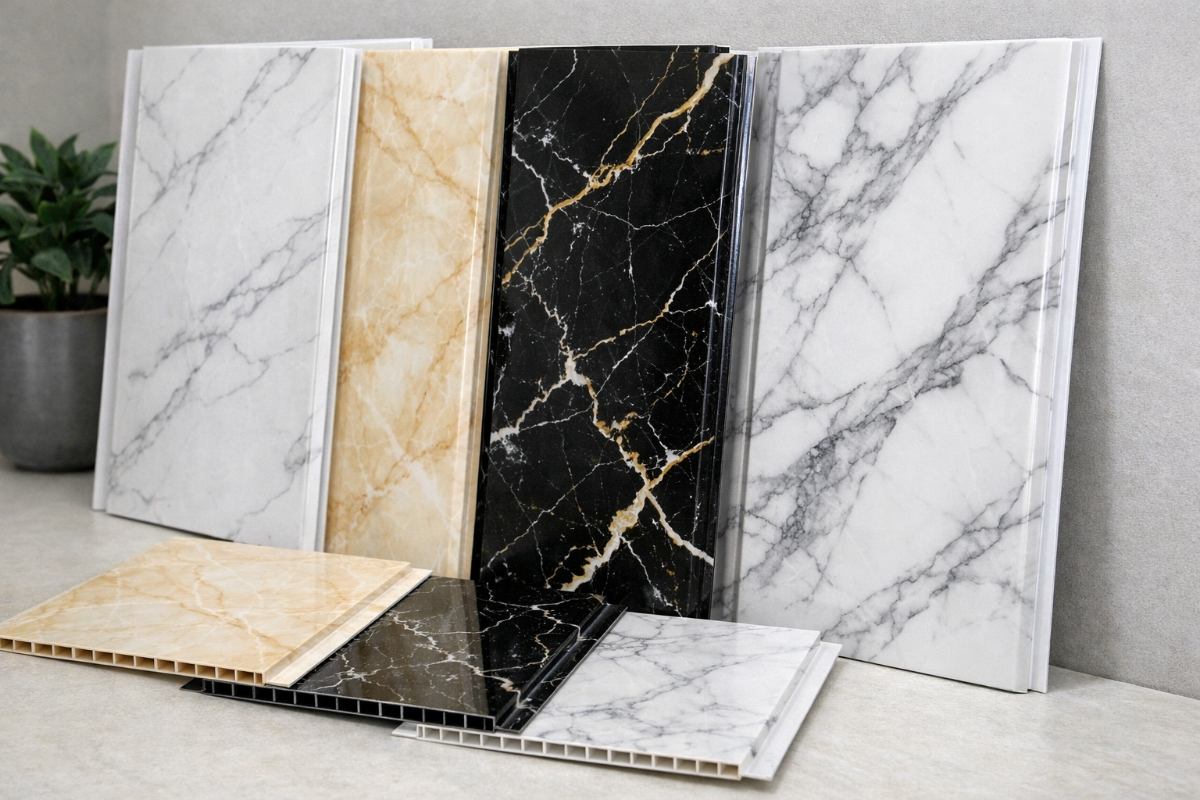
3.2 Marble and Stone Textures
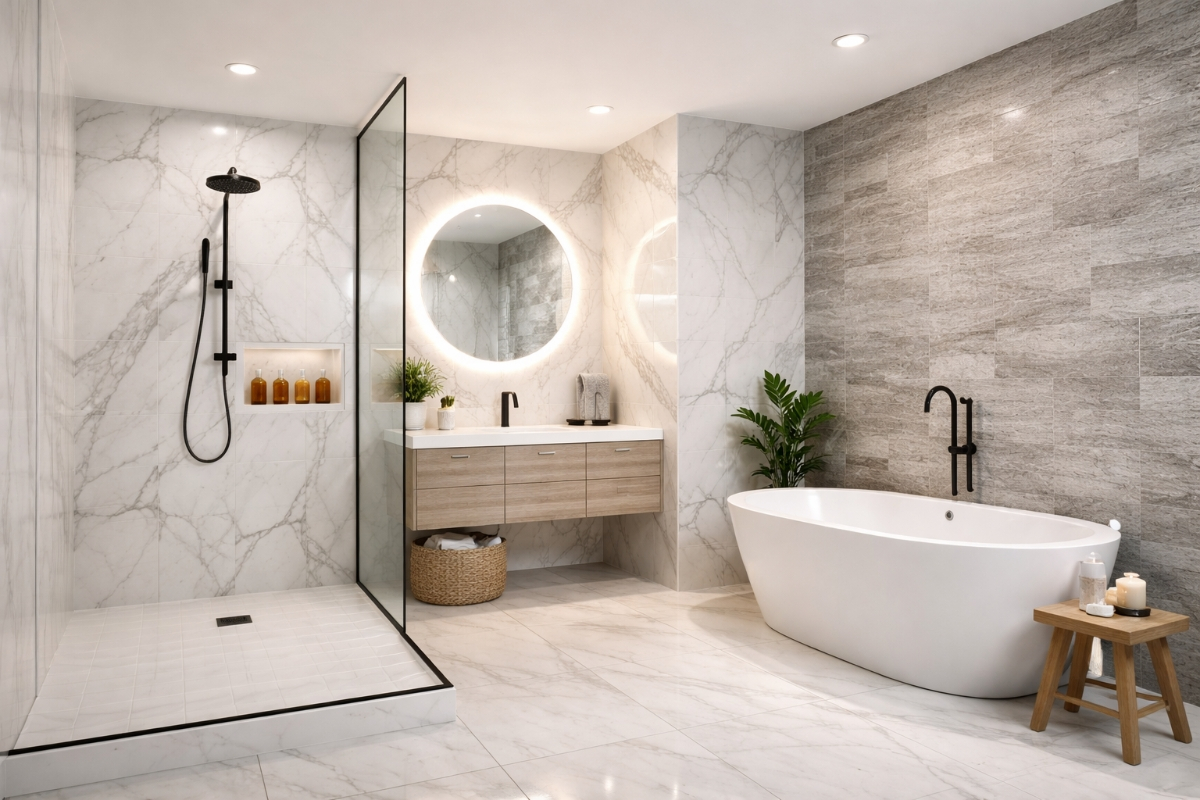
Thanks to digital printing breakthroughs, PVC panels can now convincingly replicate Calacatta marble, Carrara veining, travertine, and slate at a fraction of the cost of real stone. Moisture-resistant PVC panels with water resistance exceeding 98% now represent 42% of new bathroom renovation materials, and a large proportion of these carry stone-effect finishes. The key differentiator in 2026 is depth: manufacturers are layering translucent coatings over the print to create an illusion of three-dimensional veining that catches light like natural stone.
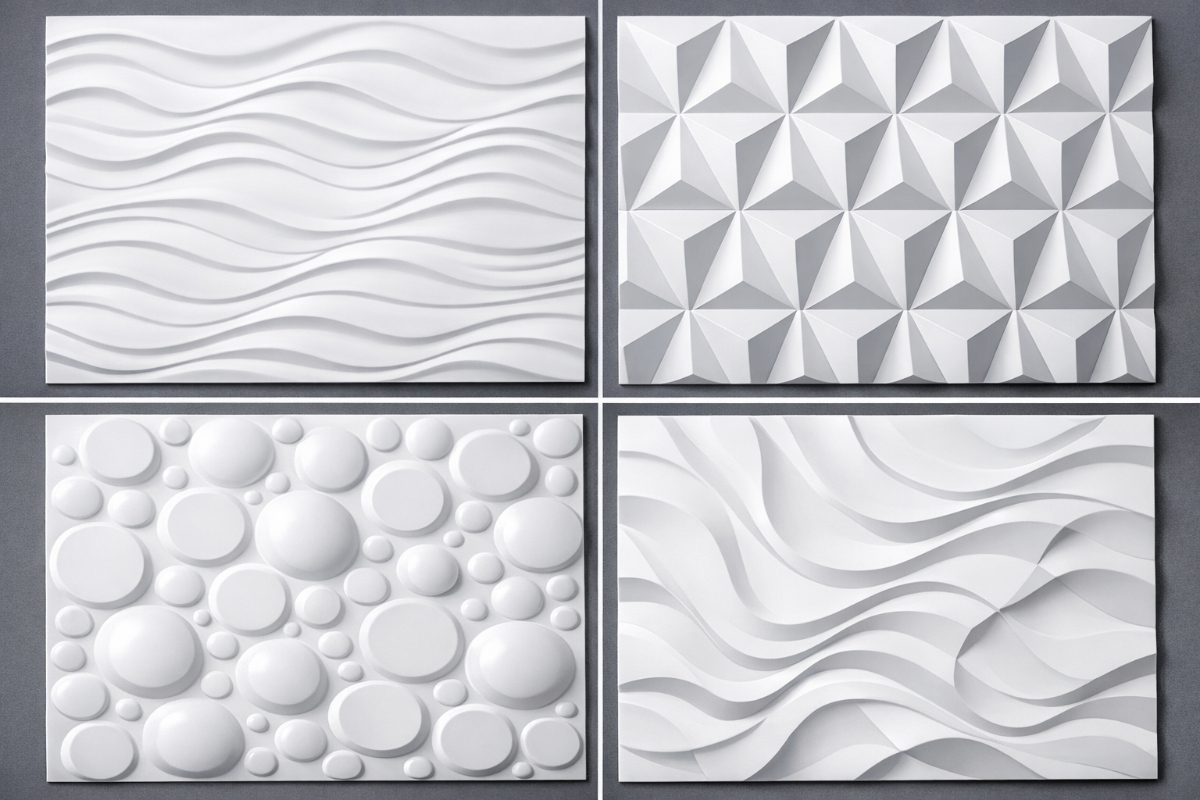
3.3 3D and Textured Panels
Flat walls are giving way to tactile surfaces. 3D PVC panels introduce wave, geometric, and organic relief patterns that add visual depth without reducing floor space. Over 25% of new residential projects in 2023 incorporated textured PVC panels and wallpapers, and that figure continues to climb. These panels work best as feature walls—behind a freestanding bath or vanity—rather than covering every surface.
Design tip: Pair a single 3D textured feature wall with surrounding flat matte panels in the same colour family for a balanced, architect-grade look.
3.4 Large-Format Seamless Panels
The trend toward larger panel sizes is driven by one goal: fewer visible joints. Panels up to 1,200 mm wide create an almost monolithic wall surface that makes small bathrooms feel significantly more spacious. This “hotel bathroom” look is now achievable at a residential budget, and it is one of the top requests interior designers report from clients seeking modern PVC panel designs.
3.5 Wood-Look Waterproof Panels
Wood brings warmth that stone cannot, but real timber in a bathroom is a maintenance nightmare. Wood-look PVC panels solve this tension perfectly—offering oak, walnut, teak, and reclaimed-timber aesthetics with complete waterproofing. These panels are especially popular in spa-style bathrooms and are frequently used on ceiling cladding as well as walls.
3.6 Bold Colours and Contrast Designs
While neutral tones still lead overall sales, there is a growing appetite for deep greens, navy blues, charcoal blacks, and even terracotta in bathroom panelling. Designers are using bold PVC panels to create high-contrast accent walls—pairing a dark panel behind the vanity with light surrounds, or vice versa. This two-tone approach adds personality without overwhelming small spaces.
3.7 Eco-Friendly and Recyclable Panels
Environmental scrutiny of PVC has pushed manufacturers to innovate. The latest generation of eco-friendly panels uses recycled PVC content (often 40–70% post-industrial material), low-VOC adhesives, and fully recyclable designs. Brands marketing sustainability credentials are seeing faster growth, particularly in European and North American markets where green building certifications influence purchasing decisions.
3.8 Smart Integration and Lighting Compatibility
The newest frontier is functional integration. Select panel systems now include pre-routed channels for LED strip lighting behind translucent or frosted panels, creating ambient glow effects without exposed wiring. Others accommodate recessed niches—seamless, built-in storage shelves that maintain the panel’s clean lines. As bathrooms become increasingly connected spaces, panels that play nicely with underfloor heating, smart mirrors, and recessed USB outlets will command a premium.
4. Design Ideas and Use Cases
4.1 Small Bathrooms
In compact bathrooms (under 4 m²), large-format light-coloured panels work wonders. Choose a pale marble-effect or soft grey matte panel to visually expand the space. The absence of dark grout lines alone makes a small room feel 15–20% more open. Install panels floor-to-ceiling for a seamless vertical line that draws the eye upward.
4.2 Luxury Bathrooms
For high-end projects, combine a book-matched marble-effect panel behind a freestanding tub with a 3D textured feature wall on the opposite side. Add LED backlighting behind a frosted panel section for a spa-like ambiance. The total material cost for this setup can be 60–70% less than genuine marble slabs—with zero ongoing sealing or polishing required.
4.3 Rental-Friendly Upgrades
Renters and landlords share a common need: fast, reversible, and affordable transformations. PVC panels installed over existing tiles with adhesive can be removed at the end of a tenancy with minimal wall damage. A landlord can upgrade a dated bathroom for a few hundred dollars in materials, potentially justifying higher rent and attracting better tenants.
Real-world scenario: A property management company in London recently refitted 30 rental bathrooms with large-format grey marble-effect PVC panels. Each bathroom took under half a day, the total material cost per unit was roughly £280, and tenant satisfaction scores on post-renovation surveys increased by 40%.
5. PVC Panels vs Traditional Tiles: A Detailed Comparison
This is the question every homeowner asks. Here is a side-by-side breakdown across the factors that matter most.
| Factor | PVC Wall Panels | Ceramic / Porcelain Tiles |
|---|---|---|
| Material Cost | USD 3–15 per sq ft | USD 5–30 per sq ft |
| Installation Cost | 40–60% lower (DIY-friendly) | Requires professional tiler |
| Installation Time | 3–4 hours (standard bathroom) | 2–3 days minimum |
| Waterproofing | 100% waterproof, no grout | Grout lines are porous; need sealing |
| Maintenance | Wipe with damp cloth | Regular grout cleaning and resealing |
| Lifespan | 15–25 years | 25–50 years |
| Design Range | Wide; digital printing offers 50+ styles | Extensive; custom mosaics possible |
| Environmental Impact | Recyclable; 34%+ use recycled content | Energy-intensive manufacturing |
| Resale Value | Moderate; improving perception | High; traditional buyer preference |
Expert insight: If you plan to stay in your home for 10+ years and budget allows, tiles remain a strong long-term investment. But for rental properties, quick renovations, commercial fit-outs, or anyone who values low maintenance, PVC panels deliver significantly better value per dollar and hour.
6. Installation and Maintenance Insights
6.1 Basic Installation Process
PVC panel installation follows a straightforward sequence that most confident DIY enthusiasts can handle:
- Prepare the surface: ensure walls are clean, dry, and reasonably flat. Minor imperfections are fine—panels are forgiving.
- Measure and cut: use a fine-toothed saw or sharp utility knife. Always measure twice.
- Apply adhesive or fix battens: use a PVC-compatible adhesive applied in vertical beads, or screw timber battens to the wall and clip panels to them.
- Install panels: start from one corner, engaging the tongue-and-groove joint. Press firmly and check for level.
- Seal joints and edges: apply silicone sealant at internal corners, around fixtures, and along the top and bottom edges.
- Fit trims and accessories: use matching PVC trims for external corners, end caps, and ceiling joints.
6.2 Common Mistakes to Avoid
- Skipping the sealant: Even though panels are waterproof, unsealed edges allow moisture behind them. Always seal every joint.
- Forcing panels into uneven walls: Significant wall bows will create visible gaps. Use battens to create a flat plane before panelling.
- Using the wrong adhesive: Standard tile adhesive or general-purpose glue may fail in wet conditions. Use a grab adhesive rated for PVC and wet areas.
- Cutting without support: Unsupported panels flex during cutting, causing ragged edges. Always cut panels face-up on a flat surface.
- Ignoring expansion gaps: PVC expands slightly with temperature. Leave a 3–5 mm gap at floors and ceilings, concealed by trims.
6.3 Ongoing Maintenance
Maintenance is minimal. Wipe panels weekly with a soft cloth and warm soapy water. Avoid abrasive cleaners, scouring pads, or solvents. For stubborn marks, a non-abrasive bathroom cleaner works fine. Inspect silicone seals annually and reapply if they show signs of shrinkage or discolouration.
Important tip: Never use bleach-based products on coloured PVC panels—they can cause fading over time. A solution of white vinegar and water is a safe, effective alternative.
7. Market Insights and Future Predictions
This section aggregates the most relevant data points for professionals, researchers, and anyone evaluating the PVC panel market at a strategic level.
| Insight | Data Point |
|---|---|
| Global PVC wall panels market value (2025) | ~USD 7.3 billion |
| Projected market value (2035) | ~USD 21 billion+ |
| CAGR (2026–2035) | ~14% |
| PVC share of waterproof bathroom panel market | ~45% |
| Residential sector share of demand | ~61% |
| Installation time reduction vs tiles | 30–40% faster |
| Recycled-content product launches (2024) | 34% of new launches |
| Antimicrobial coating bacteria reduction | 92–98% |
| Customisable design growth (recent launches) | +31% year-on-year |
| Digital printing resolution in new panels | 720+ dpi |
Future Predictions
- By 2028, eco-certified PVC panels are expected to account for over 50% of European bathroom panel sales, driven by tightening green building codes.
- AI-driven design customisation—where homeowners upload a photo and receive a matching panel design—will move from novelty to mainstream within 2–3 years.
- Antimicrobial and self-cleaning coatings will become standard rather than premium features, especially in healthcare and hospitality segments.
- Integration with modular bathroom pods (prefabricated, factory-finished bathroom units) will accelerate PVC panel adoption in new-build apartments and hotels.
8. Image SEO Suggestions
| Image Slug | Alt Text | Title Text | Description |
|---|---|---|---|
| marble-effect-pvc-panel-bathroom | Marble-effect PVC wall panel installed in a modern bathroom with freestanding tub | Marble-Effect PVC Bathroom Wall Panel | Showcases realistic Calacatta marble PVC panel in a luxury bathroom setting. |
| 3d-textured-pvc-wall-panel-design | 3D textured PVC panel used as a feature wall behind a bathroom vanity | 3D Textured PVC Panel Feature Wall | Demonstrates geometric relief pattern adding depth to a minimalist bathroom. |
| pvc-panels-vs-tiles-comparison | Side-by-side comparison of PVC wall panel and ceramic tile installation in a bathroom | PVC Panels vs Tiles Comparison | Visual comparison highlighting grout-free panels versus traditional tiled walls. |
9. Frequently Asked Questions (FAQ)
Q1: Are PVC bathroom wall panels truly waterproof?
Yes. PVC is inherently non-porous and has a zero water absorption rate. When properly sealed at joints and edges, PVC panels provide a completely waterproof barrier suitable for direct shower contact.
Q2: How long do PVC bathroom wall panels last?
With proper installation and basic maintenance, PVC panels typically last 15–25 years in a bathroom environment. Some premium uPVC panels carry manufacturer warranties of 10–15 years.
Q3: Can I install PVC panels over existing tiles?
Absolutely. This is one of their biggest advantages. Panels can be adhesive-bonded directly onto existing tiles, provided the tiles are clean, dry, and firmly attached. No demolition required.
Q4: Do PVC panels look cheap compared to tiles?
Not anymore. Modern high-definition digital printing (720+ dpi) produces stone, marble, and wood textures that are visually convincing. The seamless, grout-free finish can actually look more polished than tiled walls, especially in smaller spaces.
Q5: Are PVC panels safe and non-toxic?
Quality PVC panels from reputable manufacturers are low-VOC and non-toxic. They do not release harmful fumes under normal bathroom conditions. Always check for relevant safety certifications (ASTM, CE, or equivalent) before purchasing.
Q6: How do PVC panels compare to tiles on cost?
PVC panels are significantly cheaper overall. Material costs are lower, and the real savings come from installation: DIY-friendly panels eliminate the need for a professional tiler, and the job takes hours rather than days. For a standard bathroom, total installed cost is typically 40–60% less than tiles.
Conclusion
PVC bathroom wall panels have evolved far beyond their utilitarian origins. In 2026, they represent a genuine design material—offering marble aesthetics, 3D textures, bold colour palettes, and eco-friendly credentials at a price point and installation speed that traditional tiles simply cannot match.
For homeowners weighing their next renovation, interior designers specifying materials for clients, or property professionals managing portfolios, the question is no longer whether PVC panels are “good enough.” It is whether you can afford to overlook them. With the right panel selection, proper installation, and minimal ongoing care, a PVC-panelled bathroom can look stunning, perform flawlessly, and save thousands of dollars over its lifetime.
The trend trajectory is clear: PVC panels are not a temporary fad. They are the future of bathroom wall finishing.