

The Shift Away From Traditional Bathroom Finishes
British bathrooms are undergoing a quiet revolution. Across the UK, homeowners renovating their en-suites, family bathrooms, and shower rooms are moving away from ceramic tiles and traditional cladding materials in favour of acrylic shower wall panels. This shift isn’t driven by fashion alone. It reflects a practical response to the real-world problems that tiles, grout lines, and dated bathroom finishes create over time.
Acrylic shower wall panels offer a watertight, low-maintenance alternative to tiled walls, with faster installation, better hygiene, and a clean, contemporary look. For anyone planning a bathroom renovation or struggling with mouldy grout and cracked tiles, understanding why these panels have become so popular is essential.
This article explains what acrylic shower wall panels are, how they compare to traditional bathroom cladding, and whether they’re the right choice for your home.
What Are Acrylic Shower Wall Panels?
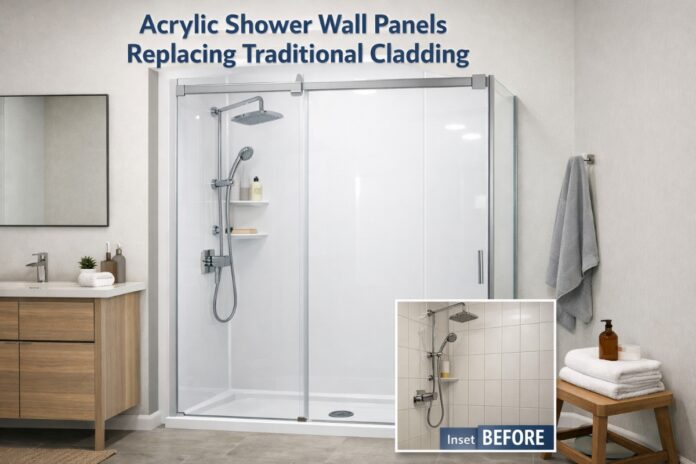
Acrylic shower wall panels are large-format wall cladding sheets designed specifically for wet environments. Made from layers of acrylic bonded to moisture-resistant backing materials, these panels create a continuous, sealed surface that covers bathroom walls with minimal joins.
Unlike tiles, which require hundreds of individual pieces and grout lines, acrylic panels are typically installed in just two or three large sections per wall. Standard panels measure around 2.4 metres in height and 1 metre in width, though custom sizes are available for non-standard shower enclosures.
The panels feature a smooth, non-porous surface that repels water and prevents moisture penetration. They’re available in various finishes, including gloss, matt, marble-effect, stone-effect, and solid colours, allowing them to suit different bathroom styles from traditional to ultra-modern.
How Acrylic Panels Differ From Other Bathroom Wall Materials
Acrylic shower panels shouldn’t be confused with cheaper PVC or laminate wall cladding. While all three are sheet-based materials, acrylic panels are significantly more durable, heat-resistant, and structurally stable. They won’t warp from steam exposure, discolour from cleaning products, or develop the surface scratches that plague softer plastic materials.
The acrylic layer is typically 3-5mm thick, backed by moisture-resistant MDF or composite board, creating a rigid panel that can be fitted directly onto prepared walls. This construction makes them far more robust than thin PVC panels whilst remaining lighter and easier to handle than stone or porcelain slabs.
The Problems With Traditional Bathroom Cladding
Ceramic Tiles and the Grout Maintenance Burden
Ceramic and porcelain tiles have been the standard choice for British bathrooms for decades. They’re hardwearing, water-resistant, and available in countless designs. However, they come with one significant weakness: grout.
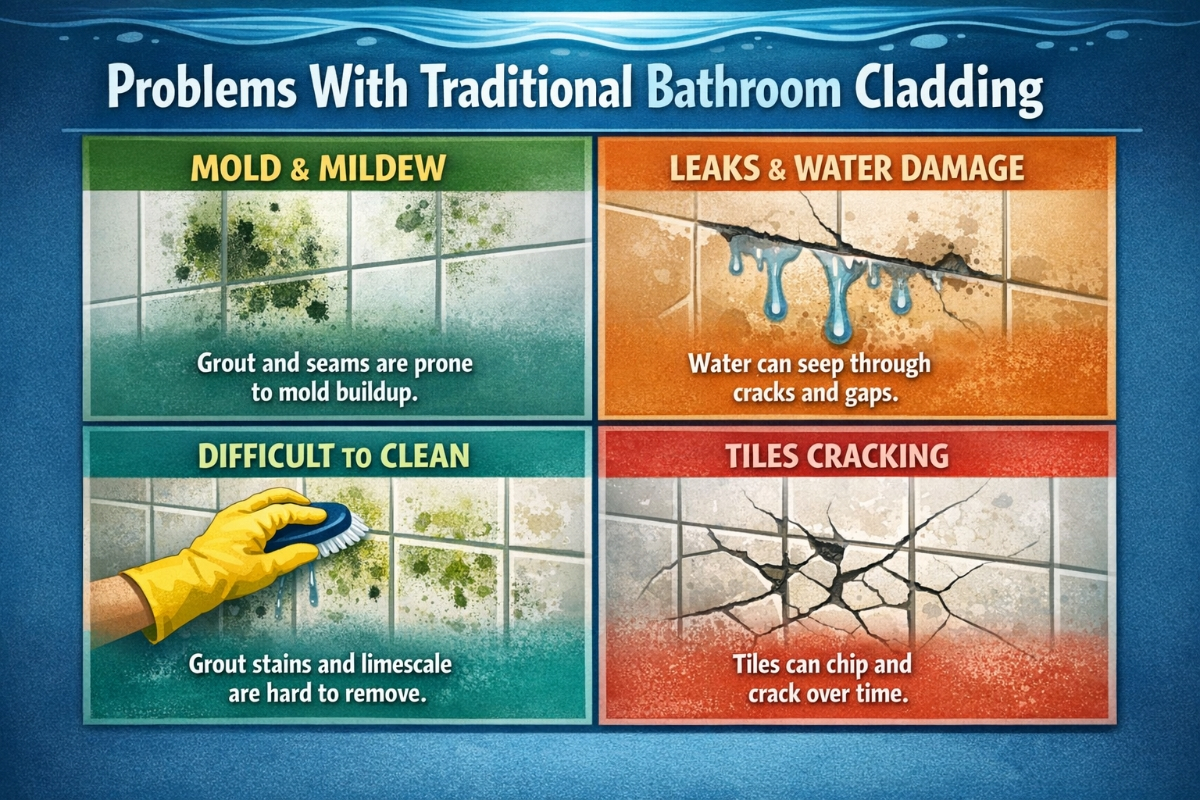
Grout lines are porous. Despite sealing, they absorb moisture, harbour bacteria, and develop mould and mildew in the humid environment of a shower cubicle. Even with regular cleaning, grout discolours over time, turning from white to grey or developing dark patches of mould growth.
Maintaining grout requires:
- Weekly scrubbing with specialist cleaners
- Annual re-sealing to maintain water resistance
- Eventual removal and replacement of deteriorated grout
- Constant vigilance for cracked or missing sections
For busy households, this maintenance becomes a persistent chore. Neglected grout doesn’t just look unsightly; it allows water to seep behind tiles, potentially causing structural damage to walls and subfloors.
Installation Time and Cost
Tiling a bathroom is labour-intensive. A professional tiler needs several days to properly prepare walls, install tiles, allow adhesive to cure, apply grout, and finish the job. This timeline extends renovation periods and increases labour costs significantly.
The skill required for quality tiling also means you’re paying for experienced tradespeople. Poorly installed tiles lead to lippage (uneven surfaces), failed waterproofing, and tiles that crack or come loose within months.
Limited Design Flexibility Once Installed
Once tiles are fixed, they’re difficult and expensive to change. Removing tiles almost always damages the underlying wall surface, requiring additional plastering and preparation before any new finish can be applied. This permanence makes it risky to choose bold patterns or colours that might date quickly.
Why Acrylic Shower Wall Panels Are Gaining Popularity
Elimination of Grout and Mould Issues
The primary advantage of acrylic shower wall panels is the complete elimination of grout lines. With only a few silicone seams where panels meet, there are virtually no gaps for water to penetrate or mould to develop.
The smooth, non-porous acrylic surface doesn’t absorb moisture. Water simply runs off during use and can be wiped dry with a squeegee. This fundamental difference transforms bathroom hygiene. Without grout to scrub, routine cleaning involves a simple wipe-down with standard bathroom cleaner.
In practical terms, this means:
- No mould growth between tiles
- No discolouration or staining
- Minimal cleaning time required
- Better air quality in the bathroom
- Reduced need for harsh chemical cleaners
For households with members who have allergies, asthma, or sensitivities to mould spores, this improvement in hygiene can be significant.
Faster, Cleaner Installation
Acrylic panel installation typically takes one to two days, compared to three to five days for equivalent tiling work. The panels are cut to size, applied to prepared walls with adhesive, and sealed with silicone. There’s no waiting for adhesive or grout to cure, meaning the shower can often be used within 24 hours.
The installation process creates less mess and disruption. There’s no tile-cutting dust, no wet trades to dry out, and no grouting debris to clean. For homeowners living in their property during renovation, this reduced disruption is valuable.
Long-Term Cost Savings
While the initial material cost of quality acrylic panels can be comparable to mid-range tiles, the total lifetime cost is often lower. Consider:
Maintenance costs: No grout sealing, no replacement grout, no specialist mould removal products, fewer general cleaning products needed.
Longevity: Well-installed acrylic panels last 15-25 years without deterioration, whereas tiled surfaces often need grout replacement every 5-10 years and may require partial or full retiling within 15 years.
Repair accessibility: Damaged panels can be replaced individually without affecting surrounding sections. Replacing cracked tiles often requires removing additional tiles to match levels and blend repairs.
Water damage prevention: The superior waterproofing reduces the risk of costly structural repairs to wall studs, floor joists, and subfloors.
Versatile Design Options
Modern acrylic shower panels replicate the appearance of natural materials with impressive accuracy. High-quality marble-effect panels, for example, feature realistic veining and depth that can be difficult to distinguish from genuine stone at normal viewing distances.
Available finishes include:
- White and neutral solid colours (gloss or matt)
- Marble effects (Carrara, Calacatta, Statuario)
- Granite and stone textures
- Metallic and sparkle finishes
- Wood-effect designs
- Geometric patterns and feature panels
This variety allows homeowners to achieve high-end aesthetics without the cost and maintenance challenges of natural materials. A marble-effect panel delivers the luxury look of a marble-clad shower at a fraction of the price, with none of the sealing and stain-prevention requirements.
Acrylic Panels vs Traditional Bathroom Tiles: Detailed Comparison
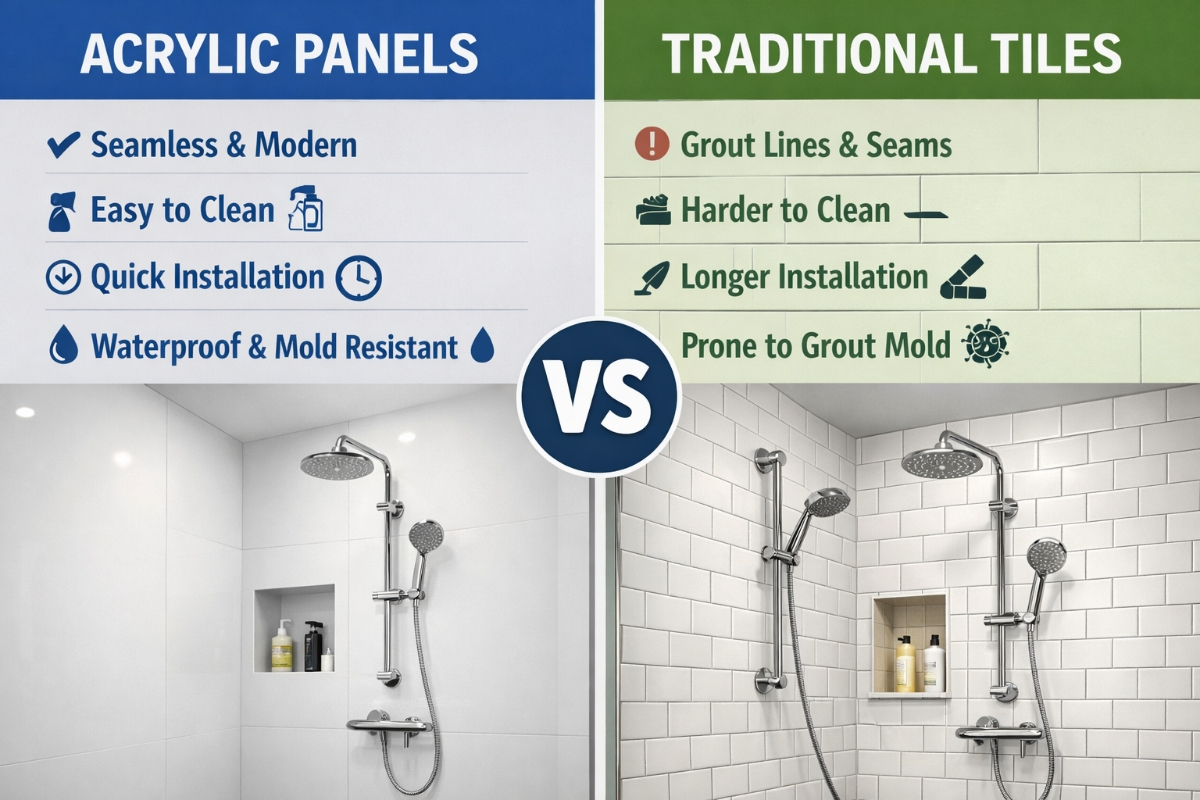
| Factor | Acrylic Shower Wall Panels | Ceramic/Porcelain Tiles |
|---|---|---|
| Installation Time | 1-2 days | 3-5 days |
| Grout Lines | None (only perimeter seals) | Extensive grout network |
| Maintenance Required | Simple wipe-down cleaning | Regular grout scrubbing and sealing |
| Mould Resistance | Excellent (non-porous surface) | Poor to moderate (porous grout) |
| Waterproofing | Superior (continuous barrier) | Dependent on grout integrity |
| Lifespan | 15-25 years | 15-20 years (tiles last, grout degrades) |
| Repair Ease | Individual panels replaceable | Difficult (may need surrounding tiles removed) |
| Visual Impact | Seamless, contemporary look | Traditional, detailed appearance |
| Texture Options | Smooth or subtle texture | Varied (smooth, relief, textured) |
| Heat Resistance | Good (warm to touch) | Excellent (cold to touch) |
| DIY Installation | Possible for competent DIYers | Requires tiling skills and experience |
| Cost Per m² | £60-150 (material) | £20-100 (material, plus labour-intensive) |
| Design Flexibility | Large formats, fewer joins | Small units allow creative patterns |
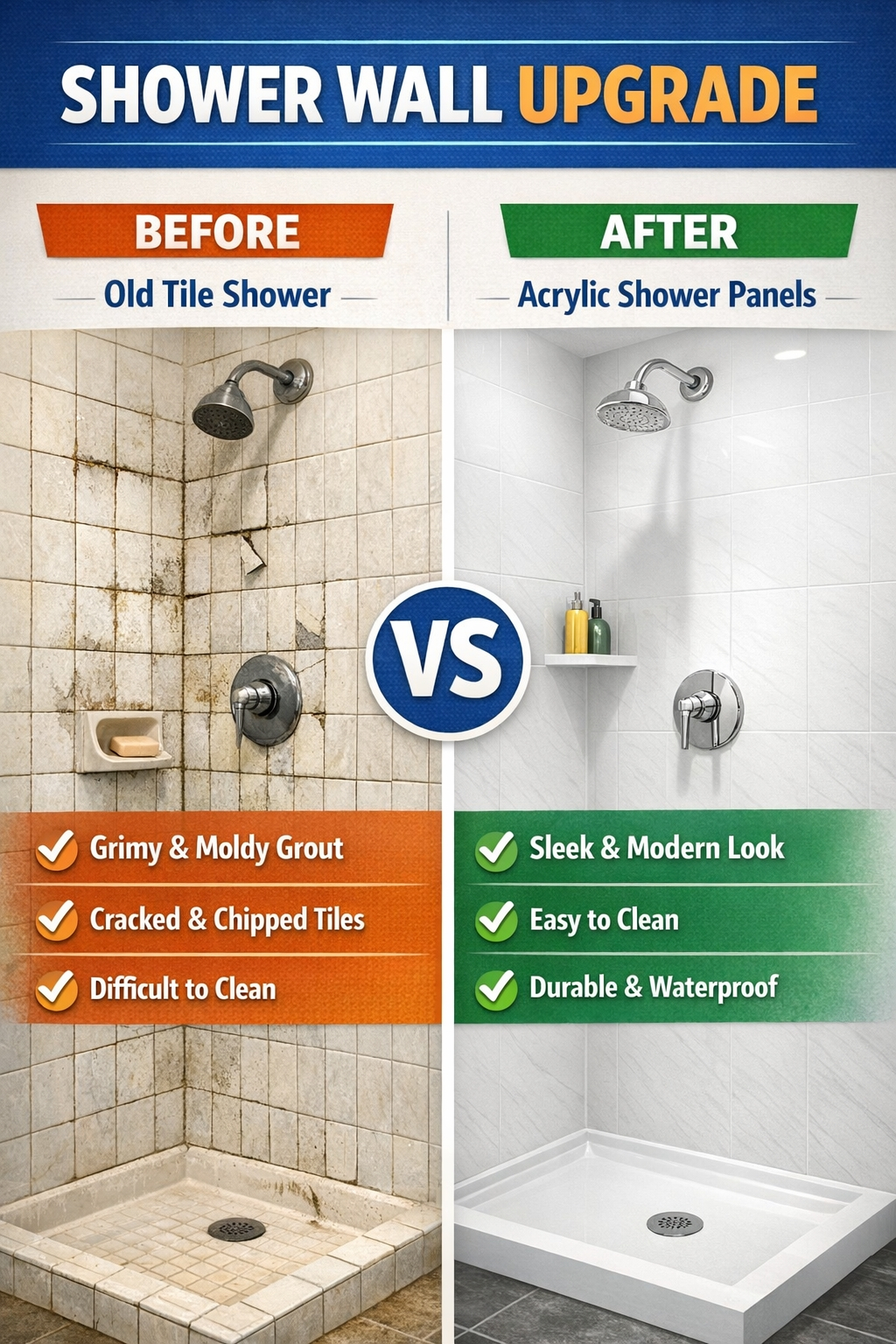
Installation, Durability, and Long-Term Performance
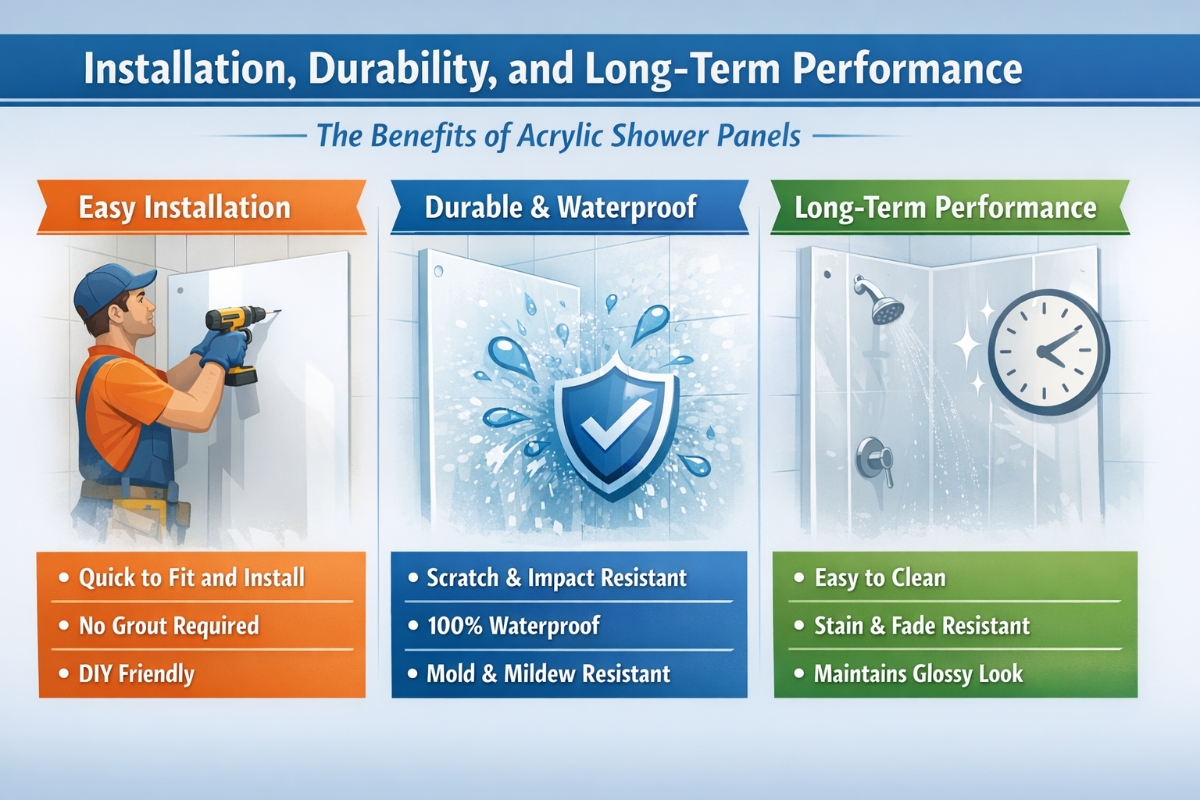
Professional Installation Considerations
Whilst acrylic shower wall panels are sometimes marketed as DIY-friendly, professional installation ensures optimal results. The key stages include:
Surface preparation: Walls must be clean, dry, level, and structurally sound. Any existing tile adhesive, wallpaper, or loose plaster needs removal. Seriously uneven walls may require plasterboard or ply lining.
Moisture barrier: Although the panels themselves are waterproof, a moisture-resistant backing such as moisture-resistant MDF or tile backer board is recommended behind the panels, particularly in shower areas.
Cutting and fitting: Panels are cut to size using standard woodworking tools. Cutouts for plumbing fittings, shower valves, and accessories require precision to maintain waterproof integrity.
Adhesive application: High-grab adhesive designed for wet environments is applied to the wall and panel back, ensuring complete coverage to prevent water ingress behind the panel.
Sealing: Silicone sealant is applied at all joins, corners, and edges where panels meet baths, shower trays, or other bathroom fittings. This final seal is critical for waterproofing.
A professional installer will complete a standard shower enclosure in 6-8 hours, leaving a fully watertight installation ready for use the following day.
Durability and Impact Resistance
Quality acrylic shower panels are surprisingly robust. The acrylic surface layer resists scratches from normal bathroom use, though sharp impacts can cause damage. They won’t crack from thermal expansion like poorly installed tiles, and they absorb minor building movement without failure.
The panels remain stable in humid environments. Unlike cheaper PVC alternatives, they won’t sag, warp, or bow over time, even in high-heat shower rooms. Their thermal properties also mean they feel warmer to the touch than ceramic tiles, creating a more comfortable shower environment.
When Replacement Might Be Needed
Well-maintained acrylic panels rarely require replacement. The most common reasons for panel replacement include:
- Physical damage from impacts or dropped items
- Silicone seal failure (though resealing is usually sufficient)
- Aesthetic changes during bathroom updates
- Installation errors that weren’t apparent initially
Unlike tiles, where a single cracked tile might necessitate partial wall removal, damaged acrylic panels can be individually replaced without disturbing adjacent panels, provided they were installed correctly with appropriate joint placement.
Hygiene, Waterproofing, and Mould Resistance
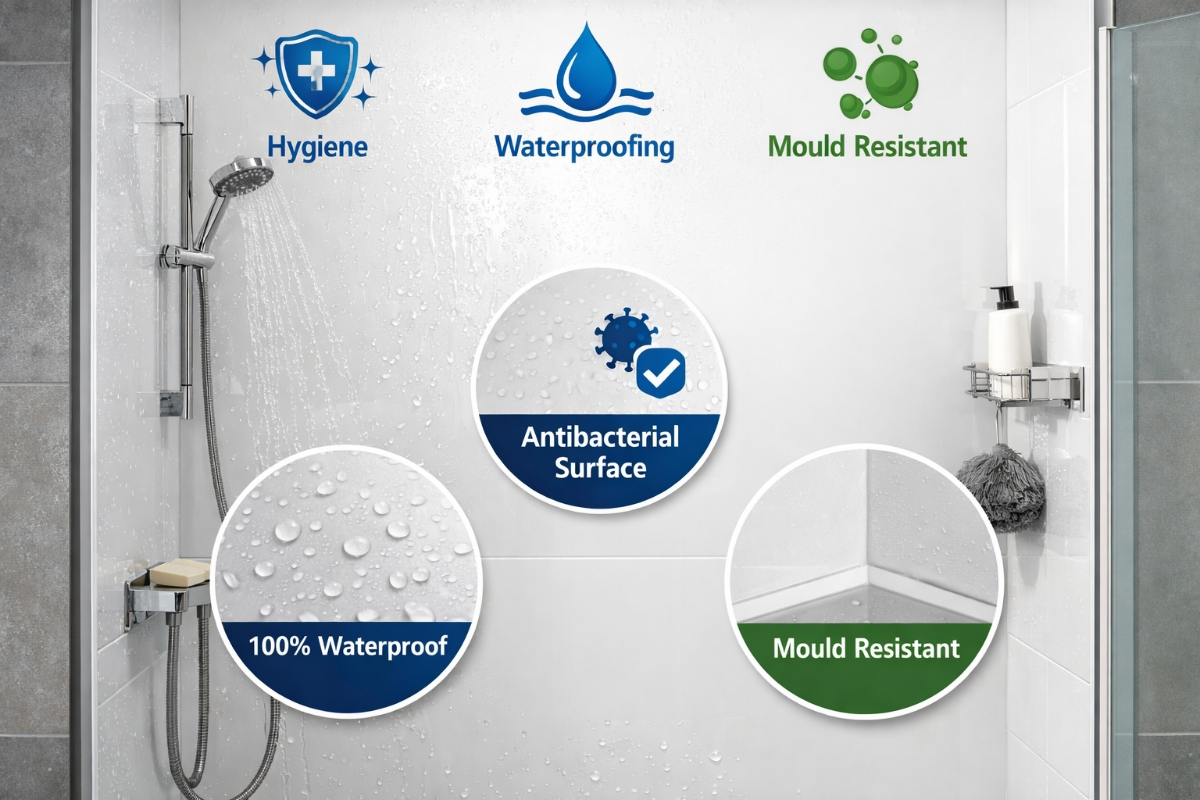
The Hygiene Advantage of Non-Porous Surfaces
Bathroom hygiene depends largely on surface porosity. Porous materials absorb water, soap residue, body oils, and limescale, creating environments where bacteria and mould thrive. Acrylic’s non-porous surface prevents this absorption entirely.
Studies on bathroom surface hygiene consistently show that seamless, non-porous materials harbour significantly fewer bacteria than grouted tile surfaces. For family bathrooms, en-suites used by vulnerable individuals, or anyone concerned about bathroom cleanliness, this matters.
The practical benefit is straightforward: less frequent deep cleaning is needed, and routine maintenance becomes genuinely simple. Most households report that bathroom cleaning time reduces by 30-50% after switching to acrylic panels.
Waterproofing Performance
Acrylic shower wall panels create an almost impenetrable moisture barrier when installed correctly. The solid panel surface sheds water immediately, and silicone seals at joins flex with building movement without failing.
This superior waterproofing protects the structure behind bathroom walls. In older properties where timber framing, lath and plaster, or early plasterboard systems are common, preventing moisture ingress is essential to avoid costly rot and damp problems.
The reduced humidity that results from better waterproofing also benefits the entire bathroom. Condensation on mirrors, windows, and other surfaces decreases, and bathroom ventilation systems work more effectively when they’re not combating moisture escaping from behind inadequately sealed tiles.
Addressing Mould Concerns
Mould in British bathrooms is overwhelmingly a grout problem. Even in well-ventilated bathrooms with extractor fans, grout develops mould unless it’s cleaned weekly with anti-fungal products.
Acrylic panels don’t eliminate mould risk entirely – silicone seals can still develop mould if neglected – but they reduce the problem by roughly 90%. The small amount of silicone used to seal panel edges is far easier to maintain than metres of grout line covering entire walls.
When mould does appear on silicone, it can be removed or the affected silicone can be cut out and replaced in minutes, a far simpler task than raking out and replacing metres of grout.
Design, Finishes, and Modern Bathroom Trends
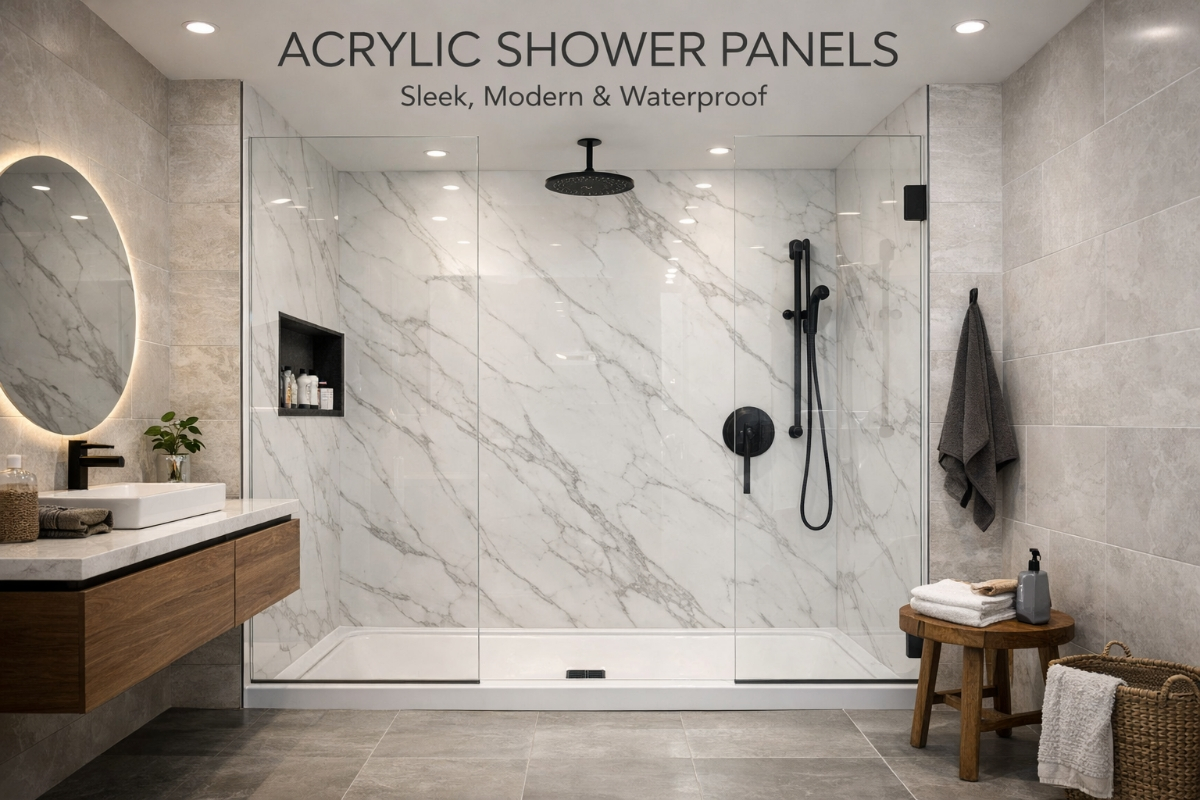
Achieving a Contemporary Aesthetic
Modern bathroom design increasingly favours clean lines, minimal grout lines, and seamless surfaces. Large-format tiles have grown popular partly for this reason, but acrylic panels take the concept further, creating walls with virtually no visible joins.
This aesthetic suits contemporary bathroom styles particularly well:
- Minimalist bathrooms with simple colour palettes
- Wet rooms with flush shower trays or floor-level drainage
- Hotel-inspired en-suites with spa-like ambiance
- Industrial-style bathrooms with concrete or metallic accents
The panels’ large formats emphasise space and light, making smaller bathrooms feel more expansive. This psychological effect is particularly valuable in typical British bathrooms, which are often more compact than those in newer international developments.
Coordinating With Bathroom Fixtures
Acrylic panels work well with various bathroom styles and fixture finishes. White or light neutral panels complement both chrome and brushed brass fittings, whilst darker or feature panels can anchor bold fixture choices in matt black or rose gold.
The panels’ smooth surfaces also showcase modern shower fittings and accessories effectively. Rainfall showerheads, digital shower controls, and frameless glass enclosures all benefit from the clean backdrop that seamless wall panels provide.
Trend Longevity and Future-Proofing
One concern homeowners sometimes express about acrylic panels is whether they’ll date quickly. The evidence suggests otherwise. The basic design principle – seamless, grout-free surfaces – has remained desirable for decades across multiple design movements.
Choosing classic finishes like white, light grey, or subtle marble effects ensures longevity. These options have proven staying power and can be updated with changes to fixtures, accessories, and soft furnishings without requiring complete replacement.
Are Acrylic Shower Wall Panels Suitable for All Bathrooms?
Ideal Applications
Acrylic shower wall panels excel in:
Standard shower enclosures: Whether over a bath or in a separate cubicle, panels are perfectly suited to typical household shower installations.
Wet rooms: The large panel formats work exceptionally well in wet rooms, where minimising joins is crucial for waterproofing.
En-suites and cloakrooms: Quick installation makes panels ideal for small spaces where extended renovation disruption would be problematic.
Properties with hard water: In areas with high limescale content, the easy-clean surface prevents the chalky buildup that mars tiles and grout.
Rental properties: Landlords appreciate the low maintenance requirements and durability for tenant-occupied bathrooms.
Situations Requiring Consideration
Certain scenarios need careful evaluation:
Listed buildings or period properties: Where maintaining historical authenticity matters, modern acrylic panels may not be aesthetically appropriate. Traditional tiles often suit period character better.
Extremely high-heat environments: Whilst acrylic panels handle normal bathroom temperatures well, steam rooms or saunas require specialist materials rated for continuous high temperatures.
Areas requiring complex curves or shapes: Tiles can accommodate intricate curves and unconventional layouts more easily than rigid panels. Custom panel fabrication is possible but expensive.
Budgets prioritising low initial cost: Basic ceramic tiles remain the cheapest option for material costs, though total project costs often favour panels once labour is included.
Working With Existing Bathroom Features
Acrylic panels integrate well with existing bathroom features when planned properly. They can be fitted around wall-mounted toilets, boxing, awkward corners, and services. Experienced installers routinely accommodate bath panel fronts, exposed pipework, and non-standard wall heights.
The key is accurate measurement and planning before purchase. Unlike tiles, where small miscalculations can be absorbed by adjusting grout line spacing, panel installations require precision. Professional measuring services are often worthwhile for complex spaces.
Common Buyer Questions Answered
How Long Do Acrylic Shower Wall Panels Last?
High-quality acrylic panels typically last 15-25 years with proper care. The acrylic surface doesn’t degrade from water exposure, cleaning products, or UV light (in windowless bathrooms). The main lifespan limitation comes from potential silicone seal deterioration, but resealing every 10-15 years maintains waterproof integrity indefinitely.
Can Acrylic Panels Be Installed Over Existing Tiles?
Yes, acrylic panels can often be installed over existing tiles if the tiled surface is sound, well-adhered, level, and clean. This approach saves the time and mess of tile removal. However, any loose, damaged, or uneven tiles must be addressed first, and the existing surface should be thoroughly degreased to ensure adhesive bonding.
Do Acrylic Panels Feel Cheap or Plasticky?
Quality acrylic shower panels don’t feel plasticky once installed. The rigid backing and proper adhesion create a solid feel similar to any wall covering. Lower-quality PVC panels do feel insubstantial and flexible, which is why choosing reputable acrylic products with appropriate backing materials is essential.
Are Acrylic Panels Difficult to Keep Clean?
Acrylic panels are exceptionally easy to clean. Regular maintenance involves wiping with a damp cloth or bathroom cleaner. Limescale can be removed with standard descaling products, and the smooth surface prevents dirt accumulation. Most users report cleaning takes a fraction of the time required for tiled surfaces.
Can I Install Acrylic Panels Myself?
Competent DIYers can install acrylic shower wall panels, particularly if they have experience with similar projects. The work requires accurate measuring, straight cutting, appropriate adhesive application, and neat silicone work. For anyone uncomfortable with these tasks, professional installation remains advisable to ensure waterproof integrity.
What Happens if a Panel Gets Damaged?
Individual panels can be replaced without disturbing surrounding sections if they were installed with appropriate joints. Minor scratches on the acrylic surface can sometimes be buffed out using acrylic polish. Deep scratches or cracks typically require panel replacement, which a professional can complete in a few hours.
Do Acrylic Panels Yellow Over Time?
High-quality acrylic panels with UV stabilisers don’t yellow in typical bathroom conditions. Cheaper materials or those exposed to direct sunlight over years might develop slight discolouration, but this is uncommon in windowless bathrooms or rooms with frosted glass. Reputable manufacturers offer guarantees against yellowing.
Final Considerations for Homeowners and Renovators
Acrylic shower wall panels represent a practical evolution in bathroom finishing. They directly address the maintenance burden, hygiene concerns, and installation disruption that make traditional tiling problematic for many homeowners.
For anyone planning a bathroom renovation, the decision between tiles and acrylic panels comes down to weighing priorities. If you value minimal maintenance, rapid installation, superior waterproofing, and contemporary aesthetics, acrylic panels deliver clear advantages. If you prefer the traditional look of individual tiles, enjoy creative tiling patterns, or need to work within a minimal budget, tiles remain viable.
The growing popularity of acrylic shower wall panels among British homeowners suggests their benefits resonate strongly with real-world needs. They solve genuine problems rather than simply offering something different, which is why they’re not just a trend but an increasingly standard choice for modern bathroom renovations.
Consider your specific circumstances, bathroom layout, aesthetic preferences, and long-term maintenance willingness. For most households, particularly those prioritising ease of upkeep and hygiene, acrylic shower wall panels prove to be the more practical choice.
Author Bio
FloorsToWalls is a UK-based bathroom interiors specialist with hands-on experience in shower wall panels, bathroom cladding systems, and modern renovation materials. Through practical work with acrylic shower panels, wall finishes, and installation solutions, the team brings real-world insight into durability, maintenance, waterproofing, and long-term performance in everyday bathrooms.
Their content focuses on helping homeowners and renovators make informed decisions by explaining materials, comparisons, and installation considerations in clear, practical terms. FloorsToWalls regularly contributes expert-led guidance on contemporary bathroom design and wall panel technologies based on industry experience and customer-facing knowledge.