


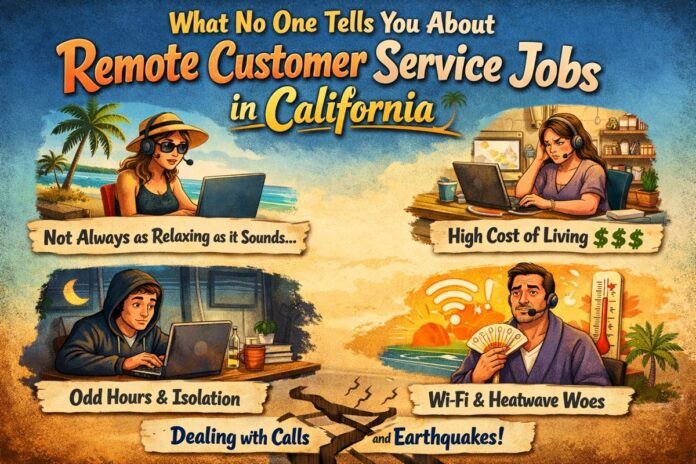
Here is the version of events most job boards want you to believe: you land a remote customer service job in California, set up a tidy home office, answer a few friendly questions, and collect a steady paycheck while wearing slippers. It sounds almost too convenient.
The reality is more layered, more demanding, and in some ways more interesting than that. Remote customer service jobs in California have grown significantly since 2020, but the market has also matured in ways that catch many new hires off guard. Performance tracking is aggressive. Emotional demands are real. Pay varies wildly depending on who employs you and whether you are classified as an employee or a contractor.
This article is for anyone seriously considering or currently working in work from home customer support in California. It cuts through the noise to give you an honest picture of what this work actually involves and how to build a real career from it.
What Remote Customer Service Jobs in California Actually Look Like Today
The term “customer service” now covers a far wider range of responsibilities than it did a decade ago. If you are applying for a customer service representative remote California role, you may be doing any combination of the following:
- Handling inbound calls, live chat, email tickets, and social media messages, often simultaneously
- Processing returns, billing disputes, subscription changes, or technical troubleshooting
- Using CRM platforms such as Salesforce, Zendesk, Freshdesk, or HubSpot to log and manage cases
- Following detailed scripts and escalation protocols with little room for improvisation
- Meeting strict KPIs including average handle time, first contact resolution, and customer satisfaction scores
The idea that remote customer service is a low-skill, low-effort job is outdated. Modern contact centers, even virtual ones, operate with a level of precision that rivals logistics operations. Every interaction is logged, scored, and reviewed.
The Tools You Are Expected to Know
Companies offering remote call center jobs in California increasingly expect candidates to arrive with working knowledge of at least one or two CRM or helpdesk tools. Training is provided, but it is rarely as thorough as advertised. You are expected to become proficient quickly.
Beyond software, you need a reliable internet connection with specific upload and download speeds, a wired connection in many cases, a quiet workspace, and sometimes a company-approved headset. Some employers will ship equipment, while others expect you to supply your own setup. This is worth confirming before accepting any offer.
The Hidden Realities Nobody Puts in the Job Listing
You Are Being Watched, Constantly
Performance monitoring in remote customer service is more sophisticated than most candidates anticipate. Employers use workforce management software that tracks your login and logout times, idle periods, talk time, wrap-up time, and sometimes even keystroke activity or screen recordings during shifts.
For example, if you work for a major e-commerce or financial services company handling customer support from home in California, your manager may receive a real-time dashboard showing exactly what you are doing at any given moment. Stepping away from your desk for an unscheduled break can flag your account, trigger a coaching session, or in repeat cases, result in disciplinary action.
This level of surveillance comes as a shock to many people who assumed remote work meant greater autonomy. In many remote customer service roles, the opposite is true. The monitoring is more systematic than in a physical office precisely because managers cannot see you in person.
Emotional Labor Is Underestimated and Under-compensated
Dealing with frustrated, upset, or sometimes hostile customers for six to eight hours a day takes a measurable psychological toll. This is called emotional labor, and it is one of the most significant hidden costs of working in customer support.
In a traditional office, you can decompress between calls by talking to a coworker or taking a short walk. Working from home, you return from a difficult call to the same four walls, with the next call queued up before you have had time to reset.
Burnout rates in customer service are among the highest of any profession. A 2023 industry report by Salesforce noted that customer-facing roles consistently rank among the most emotionally taxing positions in the workforce. California workers are not immune to this, regardless of whether they commute or not.
Schedules Are Not Always What You Expect
One of the most marketed benefits of work from home customer support California roles is schedule flexibility. The reality is more complicated. Many companies need coverage across multiple time zones or offer 24-hour support, which means a California-based agent may be asked to work evening, overnight, or early morning shifts.
If you are hired by a company headquartered on the East Coast or overseas, your “standard” shift could start at 5 a.m. or end at midnight. Weekend and holiday availability is frequently required, especially in retail, hospitality, and healthcare support roles. Shift bids and schedule rotations are common, meaning your hours may change quarterly.
The Pay Gap Is Real and It Depends on More Than Experience
Salary ranges for remote customer service jobs in California vary more than most people realize, and not always for obvious reasons. Here is a rough breakdown as of 2025:
- Entry-level remote customer service representative: $16 to $20 per hour
- Experienced agent with specialized knowledge (tech, healthcare, finance): $20 to $28 per hour
- Team lead or senior support specialist: $28 to $38 per hour
- Customer success manager or remote operations lead: $50,000 to $85,000 annually
California’s minimum wage helps establish a floor, but many remote customer service roles, particularly those offered through third-party staffing agencies or gig platforms, hover close to that floor. Meanwhile, direct hires at technology companies in San Francisco or Los Angeles can earn significantly more for similar work.
Comparing remote to in-office roles in California, the remote premium is often modest or nonexistent. Some employers actually pay remote agents slightly less, citing reduced commuting costs as justification. This is a trend worth scrutinizing when evaluating any offer.
Job Instability, Outsourcing, and the Rise of Gig-Style Contracts
The growth of remote customer service has also accelerated a troubling trend: the conversion of stable full-time roles into contract or gig-style positions. Platforms like Arise, Liveops, and NexRep connect California-based workers with customer service contracts, but these workers are typically classified as independent contractors rather than employees.
This distinction matters enormously in California, which has some of the strongest worker protection laws in the country, including AB5, which sets strict standards for contractor classification. Under AB5, many companies are legally required to classify workers as employees if their work is central to the company’s core business. However, enforcement is uneven, and many platforms continue to operate in legal gray zones.
Contract-based remote customer service workers in California often miss out on:
- Employer-sponsored health insurance
- Paid time off and sick leave
- Unemployment insurance eligibility
- Overtime protections under California Labor Code
- Expense reimbursements for home office equipment
Additionally, outsourcing remains a persistent threat. Large companies regularly shift portions of their customer service operations offshore, and a role that exists today may be eliminated or reduced in six to twelve months. This creates a ceiling on job security that many workers do not see coming.
California Employment Law and What It Means for Remote Workers
California offers stronger legal protections for workers than most states, but those protections only apply fully when you are correctly classified as an employee. Key points to understand:
- AB5 and contractor classification: If you work exclusively for one company, follow their schedule, and perform work central to their business, you may be legally entitled to employee status regardless of how your contract is worded.
- Expense reimbursement: Under California Labor Code Section 2802, employers must reimburse employees for reasonable work-related expenses, including a portion of home internet costs, phone bills, and equipment.
- Overtime: California requires overtime pay after eight hours in a single workday, not just after forty hours per week. This is more protective than federal law and applies to non-exempt remote employees.
- Meal and rest breaks: California law mandates a thirty-minute unpaid meal break for shifts over five hours and a paid ten-minute rest break for every four hours worked. These rights apply to remote employees as well.
If you are accepting a remote customer service role in California and your offer letter uses the word “contractor,” it is worth consulting a labor attorney or the California Labor Commissioner’s office before signing, particularly if the role looks and feels like full-time employment.
Skills That Actually Matter in This Field
The job descriptions for customer service representative remote California positions tend to list the same soft skills repeatedly: communication, patience, problem-solving. What they rarely tell you is what those skills actually need to look like in practice.
CRM Proficiency
Being comfortable in Zendesk or Salesforce is increasingly table stakes. The ability to navigate multiple systems simultaneously, maintain detailed case notes, and pull up account history in under thirty seconds separates average agents from high performers.
Conflict De-escalation
Handling an angry caller or an abusive chat message requires a specific skill set. This includes active listening, empathy without capitulation, and the ability to redirect a conversation toward resolution without raising your own stress levels in the process. This can be learned, but it requires deliberate practice and often formal training.
Multitasking Under Pressure
Many remote customer service roles now require agents to manage two or three live chat conversations at the same time while simultaneously updating records in a CRM. This is called concurrent handling, and it is genuinely demanding. Speed and accuracy together are the goal, and KPIs are unforgiving.
Understanding KPIs and How They Affect Your Job
If you do not understand what Average Handle Time, CSAT scores, First Contact Resolution, and Net Promoter Score mean, you will struggle to perform well or advocate for yourself during performance reviews. Knowing your numbers, what they measure, and how to improve them gives you genuine leverage in this field.
An Honest Look at the Pros and Cons
Genuine Advantages
- No commute: In California, where traffic is legendarily bad, eliminating a daily commute can add hours to your week and significantly reduce transportation costs.
- Entry into the workforce: These roles often require no college degree and can serve as a legitimate starting point for careers in operations, sales, or customer success.
- Geographic flexibility: You can live in a lower-cost part of California (think Fresno or Bakersfield) while working for a company based in San Francisco or Los Angeles.
- Skill development: Working across CRM platforms, handling complex situations, and learning to manage your own productivity builds a transferable skill set.
Real Disadvantages
- Isolation: Working from home without regular human contact can lead to loneliness and reduced motivation over time, especially for extroverts.
- Limited career visibility: Remote workers can be overlooked for promotions and internal opportunities simply because they are out of sight.
- Burnout from emotional labor: Without built-in social decompression, the psychological weight of customer-facing work accumulates more quickly.
- Job insecurity: High outsourcing risk and gig-ification of the role create structural instability.
- Compensation stagnation: Without proactive upskilling and role transitions, pay growth in customer service is slow.
How to Actually Succeed and Grow in This Field
Remote customer service does not have to be a dead end. With deliberate effort, it can be a launching pad into better-paying, higher-status roles within technology, operations, or client management. Here is how to make that happen.
Treat It as a Launchpad, Not a Destination
The best-paid professionals in customer-adjacent fields, customer success managers, account managers, operations directors, almost all started in frontline support. The difference is that they actively positioned themselves for advancement rather than waiting for it to happen.
Invest in Certifications That Pay Off
Certifications in Salesforce, HubSpot, or Google Analytics can increase your earning potential significantly. The Salesforce Certified Administrator certification, for example, can move you from a $20-per-hour support role to a $65,000-plus operations role within one to two years of dedicated study.
Document Your Impact
Keep records of your KPI performance, positive customer feedback, and any process improvements you contribute to. When applying for internal promotions or external roles, this data becomes your most compelling credential.
Specialize in a High-Value Industry
Customer service in healthcare, fintech, SaaS, or legal tech pays considerably more than in retail or hospitality. If you currently work in a lower-paying sector, use your experience to transition into a higher-paying one. The core skills transfer, and the pay difference can be substantial.
Build Internal Visibility
Volunteer for training programs, ask to mentor new agents, and participate actively in team meetings. Remote workers who are invisible rarely get promoted. Those who are consistently present and vocal, even digitally, are far more likely to advance.
The Bottom Line on Remote Customer Service Jobs in California
Remote customer service jobs in California are real, accessible, and can be genuinely rewarding. But they are not the effortless lifestyle option that some corners of the internet suggest. They come with significant demands: performance monitoring, emotional labor, scheduling complexity, and a market that is increasingly fragmented between stable employment and precarious contract work.
California’s strong labor laws offer some protection, but only if you understand them and know your classification. The pay can range from barely above minimum wage to a comfortable living depending on your employer, your industry, and your skills.
The people who do well in this field are not the ones who stumble into it looking for easy money. They are the ones who take it seriously, build their skills deliberately, advocate for their rights, and use it as a stepping stone toward something bigger.
If you are considering a customer service representative remote California role, go in with clear eyes. Understand what you are signing, what you are entitled to, and what you are working toward. That clarity is what separates a dead-end job from the beginning of a career.
If you found this breakdown useful, it reflects the kind of research-backed, no-fluff career and business content that CRECSO publishes regularly. Whether you are navigating the remote job market, evaluating a career shift, or trying to understand the fine print behind modern work arrangements, the goal here is always the same: give you the information you actually need, not the version that sounds good in a job listing.